| Book at a Glance |
|---|
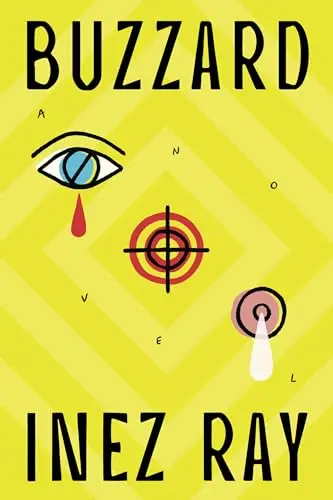
| Title: Buzzard |
| Author: Inez Ray |
| Genre: Dystopian Fiction |
| Published: September 2026 |
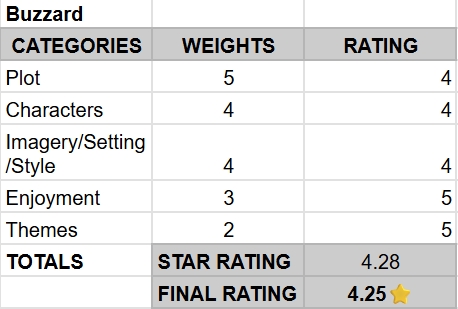
| My Rating: 4.25/5 stars |
| Quick Verdict: Buzzard is a chilling dystopian debut whose greatest strength lies not in its political premise, but in its nuanced portrayal of how ordinary people become complicit in oppressive systems. |
A Dystopian Future That Feels Alarmingly Close
A punchy debut novel that takes place in a dystopian future not too far from now, Buzzard imagines a world where the U.S. has fractured, corporations monitor fertility, and abortions are illegal. In the wake of the overturning of Roe vs. Wade – 13 states enforce a full ban and 6 states ban abortions after 6 weeks – its premise feels unsettlingly plausible. But Buzzard’s greatest achievement isn’t its political vision – it’s its refusal to divide characters into neat boxes of heroes and villains. Instead, Inez Ray asks a more uncomfortable question: how do ordinary people learn to live inside an oppressive system?
Ordinary People, Not Villains
The characters in Buzzard feel startlingly human. Multiple characters accept jobs with Obsityan or other paramilitary groups not because they believe in the mission of these groups, but because survival demands compromise. The novel refuses to excuse these choices, yet it insists we understand how ordinary people become participants in systems that they recognize as unjust. They are willfully ignorant of the darker machinations of the world because that is the only way they can move forward and live with themselves. Sona, the interviewer and the only main character from the upper rungs of society, fully believes the propaganda that’s been fed to her about fertility, abortion, and women’s place in society. And yet, we see all of these characters struggle with or actively fight the oppressive nature of the system they live in. Mae risks her life and the opportunity to see her sons (who she was violently taken away from when they were teenagers) to save the life of one girl. Sona risks demotion and ostracization and potentially jail to prove that Obsityan is committing grave human rights abuses. In Buzzard, nobody is perfect, but everyone is human.
Where The Novel’s Worldbuilding Falls Short
There were two things in the novel that made me raise an eyebrow. The first was how accepting of gender fluidity the oppressive paramilitary groups were. The novel is so interested in how authoritarian governments regulate bodies, yet we don’t see that reflected with gender fluid and transgender people. Because the novel is otherwise so perceptive about the politics of bodily control, this omission feels especially conspicuous. If reproductive autonomy is central to the regime’s ideology, it seems unlikely that gender identity would escape similar scrutiny. Secondly, the brief reference to Israel introduces questions about antisemitism and international politics that the novel never develops, making the moment feel less like meaningful worldbuilding than an abandoned thread.
Final Thoughts
Even where its worldbuilding occasionally leaves questions unanswered, Buzzard excels at depicting the compromises ordinary people make under authoritarianism. Its greatest strength is not imagining monsters, but showing how recognizable people become part of monstrous systems.
Fans of The Handmaid’s Tale and politically engaged dystopian fiction like Parable of the Sower should put this near the top of their lists.
Thank you to NetGalley for the advanced copy of this book.
Publication date: September 22, 2026
Related Reviews
Milkteeth by Caitlin Starling – A gothic horror novel that explores bodily autonomy through transformation rather than politics, making it an excellent companion to Buzzard‘s examination of state control.