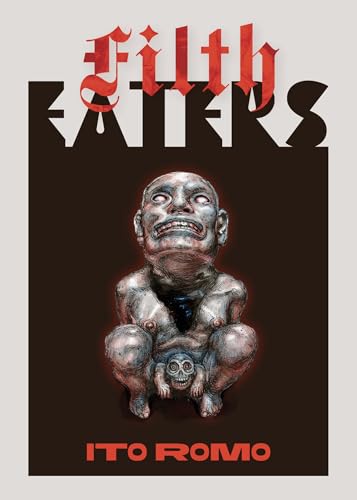
The world of the filth eaters, Meso-American vampires who can consume their victim’s memories and experiences and pass that knowledge on to their vampire offspring, is fascinating and innovative. Romo introduces so many ideas I’ve never encountered in vampire fiction, only to squander them by rushing past them in service of a barebones plot.
The vampires in Romo’s novel not only have different weaknesses and traits based on their geographic origins (European vampires are vulnerables to silver, while Meso-American vampires are vulnerable to maguey, a type of agave), but some also possess the ability to become filth eaters, consuming and transmitting ancestral knowledge. The concept alone has multiple implications for the characters that could have been explored further.
Romo also shows how Spanish colonization affected not just humans but vampires as well. A codex containing their ancient ancestral language, which unlocks the key to their memory-transference power, was “either destroyed in the great fires or stolen by the conquerors and sent to Spain.” Against the backdrop of the Spanish conquest of the Americas, the preservation of knowledge as a power of Meso-American vampires takes on another level of complexity and historical significance. Yet, this thread is never fully explored, and I was left wanting more.
This novella has five different POVs, yet at just 150 pages, it barely scratches the surface of its wonderfully diverse vampires. This story should have been at least twice as long, if not longer. Just as you start to get drawn into one vampire’s world, the narrative jumps to another POV, often in different countries and time periods, forcing you to start all over again. This wouldn’t be so frustrating if the characters were better developed, but these vampires were truly dead, both in nature and in character.
Ultimately, I found the ideas behind this story fascinating, but the flat characters, barebones plot, and dry prose left much to be desired.
Related Reviews
Tillinghast by Clare Cavanagh – A modern gothic novel that blends haunting atmosphere, psychological unease, and literary horror into an unsettling exploration of grief.
Milkteeth by Caitlin Starling uses vampirism to explore themes of motherhood, labor, and bodily autonomy.
Part of The Vampire Archives
This review is part of my ongoing Vampire Archives project, where I explore vampire folklore, literature, and the evolution of the vampire across cultures and time periods. If you’d like to follow the series from the beginning, check out The Vampire Archives: An Introduction.