Synopsis
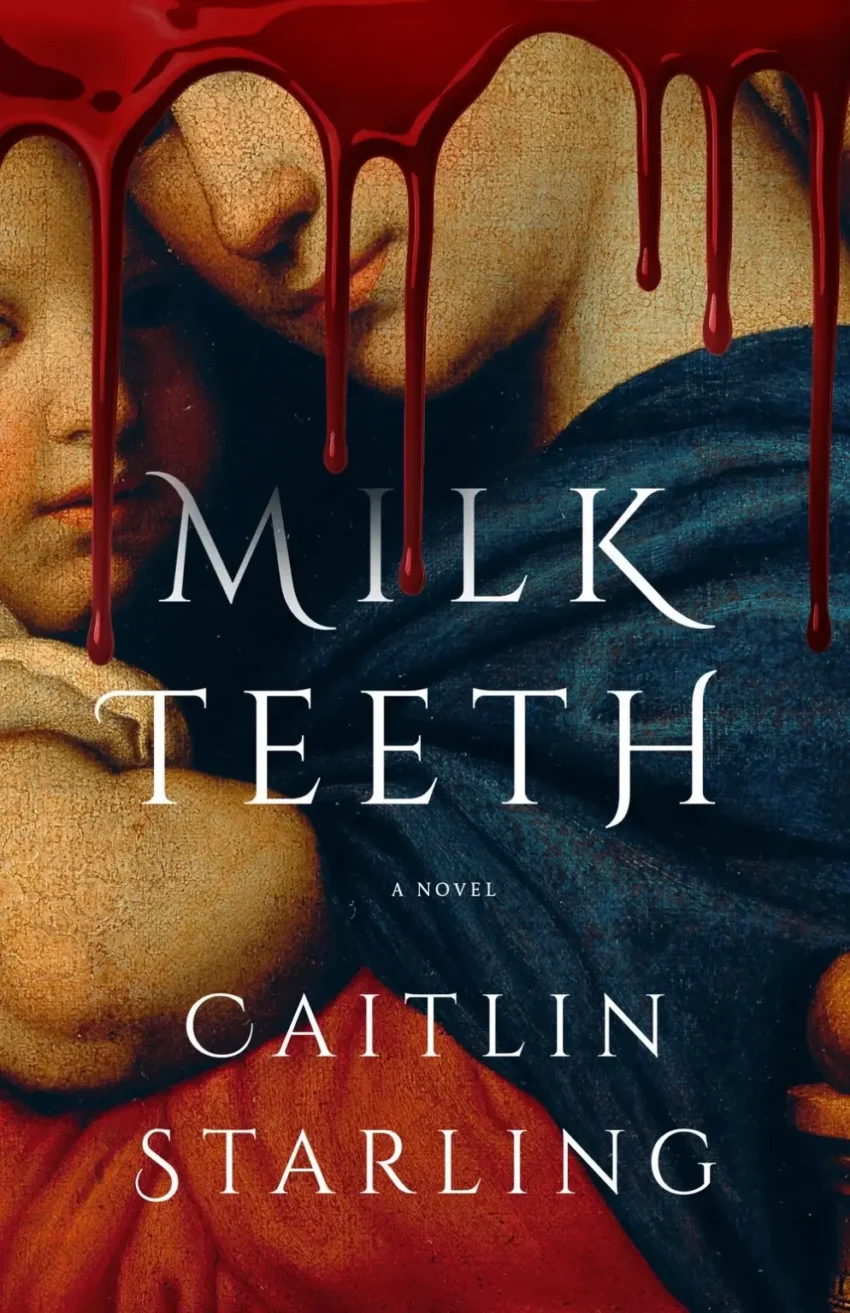
I picked up Milkteeth by Caitlin Starling because of its beautiful cover and intriguing premise. The novel follows Beatrice, a vampire whose role is to nurse fledglings to maturity. After taking on a third fledgling, she finds herself pushed beyond her physical and mental limits as a disturbing transformation overtakes her body.
Milkteeth starts off with Beatrice attending a lactation workshop for new mothers to better understand her role as a brood mother and its impact on her body. What makes Milkteeth particularly interesting is how far it departs from traditional vampire narratives. Rather than focusing on predation, immortality, or aristocratic power, Starling uses vampirism to explore motherhood, labor, and bodily autonomy. It’s a fascinating example of how contemporary authors continue to reinvent the vampire for new cultural concerns—a topic I’ll be exploring further in my Vampire Archives series.
What Milkteeth Does Well
Throughout the novel we see how Beatrice is treated by other vampires and jammed into her role as brood mother/nursemaid. She is locked up in a basement (lair) with little freedom of movement or even niceties like Wi-Fi or artwork. Because her role as a brood mother is the only source of status and purpose available to her, her identity becomes inseparable from her ability to perform it. Thus, when the opportunity arises to take on more than she can chew, she accepts boldly. If she can’t be a brood mother, what is she?
What makes this setup particularly effective is the way it echoes the historical role of wet nurses. Historically among the wealthy, nursing has been looked down upon and relegated to their poorer counterparts. I won’t even get into the racial aspect of nursing in the U.S. But suffice it to say that there are many arguments that can be made about the exploitative and exacting relationship between nursemaid and biological mother/parent. Understanding this, the allegories that Starling makes vis à vis vampirism are extremely apt and she does a great job of expressing the exacting nature of being forced into such a position where you are overworked and undervalued for something that your body can do.
Where Milkteeth Falls Short
Where the novel falls short for me is the prose, which is an issue I also had with Caitlin Starling’s The Starving Saints. While her writing is vivid and evocative, making it easy to imagine the novel’s gruesome events, I found the overall flow somewhat middling. Starling overuses contrastive constructions such as “it’s not x, it’s y” or “not x, not y… but something else entirely.” She also relies heavily on the word “thing” when describing both vampires and abstract sensations: “We are also prideful things,” “And yet she seemed unchanged; such a fragile thing,” and “I could feel the force of her attention like a physical thing.” Individually, these constructions are effective. Repeated dozens of times, however, they began to stand out more than the story itself, making for a repetitive and boring reading experience.
The last example illustrates my main issue with the prose. Rather than describing the nature of the attention Beatrice feels, Starling simply labels it a “physical thing.” The sentence implies intensity without actually conveying it. Was the attention crushing, suffocating, binding, or invasive? By relying on a vague placeholder rather than a more precise description, the prose feels less evocative than it initially appears.
Another issue I had was with Beatrice’s son. His arrival should have carried significant emotional weight, but because the novel spends so little time developing either him or Beatrice’s relationship with him, he functions more as a catalyst for the plot than as a fully realized character.
Final Thoughts
Overall, my lower-than-expected rating comes down to the weakness of the prose, repetitiveness of the narration, and some weaknesses in the plot. However, Starling presents vampires in a novel way, and I do think that the allegories for womanhood and motherhood were strong and she is great at creating a creepy and gruesome atmosphere with her writing. If any of this sounds interesting to you, then you should definitely pick up this book.
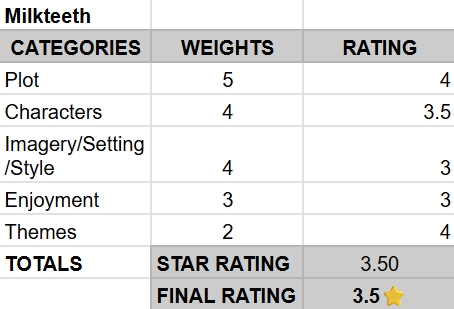
Rating: 3.25/5 stars. Review of advance copy received from NetGalley.
Part of The Vampire Archives
This review is part of my ongoing Vampire Archives project, where I explore vampire folklore, literature, and the evolution of the vampire across cultures and time periods. If you’d like to follow the series from the beginning, check out The Vampire Archives: An Introduction.
Related Reviews
Tillinghast by Clare Cavanagh – A modern gothic novel that blends haunting atmosphere, psychological unease, and literary horror into an unsettling exploration of grief.
Buzzard by Inez Ray – A chilling dystopian novel that examines bodily autonomy through authoritarian politics instead of gothic horror.