“Every age embraces the vampire it needs.” – Nina Auerbach, Our Vampires, Ourselves (1995)
Introduction
The vampires of today are often rich, emotionally complex, and sexy. Look at any contemporary vampire media (e.g. Vampire Diaries, True Blood, Twilight, etc.) and the vampires more so suit the bad boy archetype (leather jacket and all), than a plague-bearing corpse.
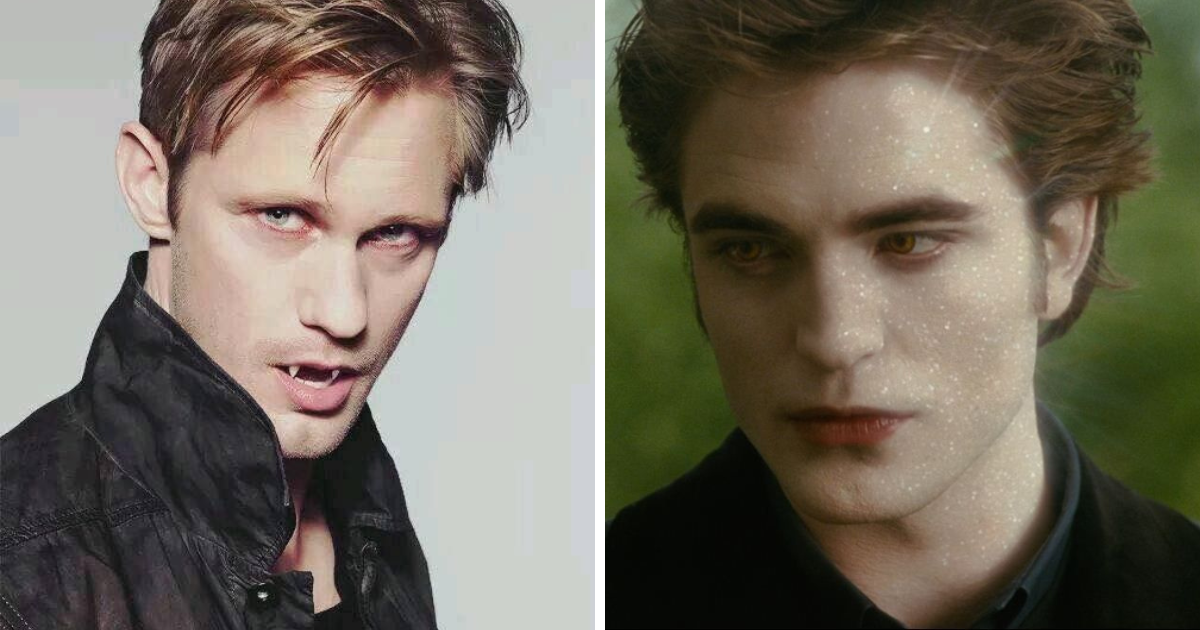
But that is a remarkably recent invention. So, where do vampires come from? And were they always so…sparkly?
The vampire that haunted the Eastern European imagination was not a well-dressed brooding immortal; it was a dead neighbor or spouse, its body bloated and cold to the touch. The vampire was blamed for sickness, crop failure, and unexplainable deaths. To understand how we arrived at Edward Cullen, we have to begin with the much stranger creature that came before him.
What Is a Vampire? (Ancient origins and traits)
Blood-drinking or revenant-like creatures can trace their origins back to ancient Mesopotamia, Egypt, and India. But the blood-sucking creatures that we know and love today have their origins in Eastern European folklore.
In Romania, vampires were called ‘strigoi’, ‘moroi’, and ‘pricolici.’ The word “vampire” was actually popularized by the French and English, used to refer to vampirism in Poland, Russia, and Macedonia.
There were multiple ways to become a vampire in Romanian folklore: be unmarried or unforgiven for something at the time of your death, be murdered, have an animal walk over or under your dead body…you get the picture.
Vampires of that time were reanimated corpses and thus had the appearance of one – bloated, foul-smelling, and cold to the touch. They were believed to torment their relatives and cause illness, death, drought, and plague.
Why People Believed in Vampires (Death, anxiety, and social control)
How can whole societies come to believe that the dead walk among them?
Vampires served many purposes for peasant communities in Europe. On a psychological level, vampires gave communities an answer for sudden or unusual events. A healthy family starts dying off one by one? A dead relative – now vampire – must be tormenting them. Your livestock die off? A vampire must be stealing their life force.
Vampire epidemics – widespread belief in vampirism – according to John Blair, arose against “backgrounds of acute trauma: foreign invasion combined with socio-economic and religious change in medieval England; bubonic plague, the Reformation, etc.”
Anthropologist Carl-Ulrik Schierup found that belief in vampires remained stronger among some Wallachian immigrant communities in Scandinavia than among relatives back home in Serbia. He argued that vampire beliefs sometimes became more important when traditional family hierarchies came under pressure. In these cases, fears of vengeful dead relatives reflected tensions between generations rather than fears of literal monsters.
Did People Really Believe in Vampires? (belief vs. metaphor)
The modern reader might assume that the vampires of Eastern European folklore were much like the vampires of today, existing in the imagination and far removed from actual belief or science. However, nothing could be further from the truth. In fact, several “vampires” were dissected by surgeons.
“If there is in this world a well-attested account, it is that of the vampires. Nothing is lacking: official reports, affidavits of well-known people, of surgeons, of priests, of magistrates; the judicial proof is most complete. And with all that, who is there who believes in vampires?” – Jean-Jacques Rousseau, Letter to the Archbishop of Paris, 1762
Throughout the eighteenth and nineteenth centuries, communities across Eastern Europe recorded alleged cases of vampirism. On March 8, 1820, various local elders wrote to Prince Miloš Obrenović of Serbia (1815-1839) that over the past few days people believed a vampire was responsible for a series of deaths and asked permission to dig up the graves. While the prince saw this belief in vampires as pure superstition and against the doctrine of the church, to the peasants, it was a very real fear.
The United States of America also saw its fair share of vampire panic in the 18th and 19th centuries when tuberculosis was rampant. In fact, the last vampire was exhumed in Rhode Island in 1892. Mercy Lena Brown was one of the last in her family to die from tuberculosis (also known as consumption). When neighbors – convinced that someone in the family was a vampire – exhumed the body, they found clear signs of vampirism. Mercy’s heart was burnt, mixed with water, and given to her surviving brother to drink in order to stop her fatal influence over him.
I would be painting an overly broad picture of Eastern European society if I said that everyone at the time believed in vampires. In fact, there were numerous instances of people pretending to be vampires in Yugoslavia to sleep with women, steal resources, etc.
Conclusion
Far from being merely fanciful horror stories, the vampires of Eastern European folklore were a way to explain otherwise confounding or traumatic phenomena caused by social, cultural, or religious changes that upended the customs and belief systems of the community. Vampires were also used to explain confounding phenomena associated with death and decomposition. Vampires were usually your family members or neighbors and not rich aristocrats with sprawling castles.
So how did the bloated corpse of folklore become the aristocratic vampire of literature? I’ll explore that transformation in my next post on the birth of the literary vampire.
This article is part of my ongoing exploration of vampire folklore and literature. You can view the full curriculum here. The Vampire Archives: An Introduction to My Vampire Literature Curriculum
Resources
The Vampire: A Casebook by Alan Dundes
Killing the Dead: Vampire Epidemics from Mesopotamia to the New World by John Blair
The Great New England Vampire Panic | History & Archaeology | Smithsonian Magazine