The month of May came and went in a blur. One day I’m shivering in five layers of clothing (it feels far too late in the year to be wearing a winter coat, even if the weather disagrees), and the next it feels like a tropical paradise. That’s spring for you. And now summer is already peeking around the corner.
This month was full of so many wonderful things. My visa for Spain was approved, and I got engaged—all within the span of a single week. There was also plenty of travel, including a trip to the Great Smoky Mountains and watching my father walk down the aisle. All in all, it was a whirlwind of a month that left me feeling a little breathless as we step into June.
Novels
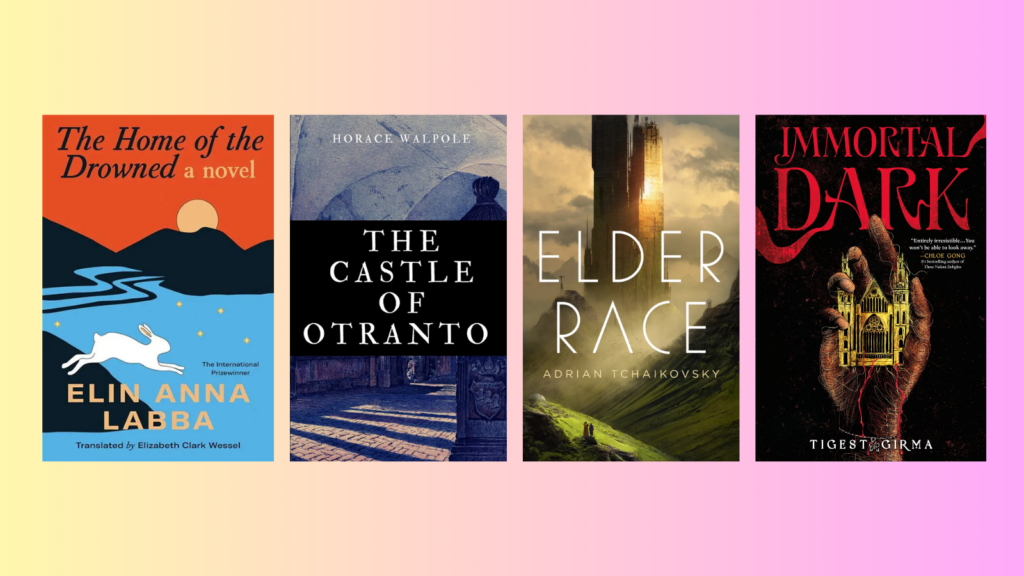
Elder Race (Elder Race #1) by Adrian Tchaikovsky
Genre: Sci Fi | Fantasy
Rating: 4.5/5 stars
The final book I read in May—and one I finished in just two days—helped sweeten a somewhat disappointing reading month. A blend of science fiction and fantasy, Elder Race follows Lynesse, Fourth Daughter of the Queen and a perpetual disappointment to her mother, as she invokes an ancient pact with the mysterious Elder sorcerer to save her world from an encroaching threat.
“Any sufficiently advanced technology is indistinguishable from magic.” – Clarke’s Third Law.
Culture clashes abound between the legendary Nyrgoth Elder—actually the last human from Earth, an anthropologist armed with advanced technology such as a cryosleep chamber—and Lynesse, a sword-wielding, fairy-tale-believing princess. What appears to be magic to one is simply science to the other.
Adrian Tchaikovsky is quickly becoming one of my favorite authors. I started 2026 with his novel Children of Time, which pulled me back into science fiction after a long absence. Elder Race is a short, entertaining romp through a world where science has been forgotten, and an abandoned anthropologist has become a legendary wizard.
“I am nothing but a scientist of sufficiently advanced technology, which is to say a magician.” – Nyrgoth Elder (Nyr)
Immortal Dark (Immortal Dark Trilogy #1) by Tigest Girma
Genre: Dark Academia | YA
Rating: 3/5 stars
The first book in the Immortal Dark trilogy follows Kidane, an 18-year-old girl whose twin sister has been kidnapped by vampires, as she’s forced to live with one in order to reclaim her ancestral home. And did I mention that the vampire she’s living with might even be the one who took her sister?
This was recommended to me as a book with Black vampires and while it does have them, I wouldn’t really consider this a vampire novel. The premise was genuinely intriguing, but the execution left much to be desired.
Kidane, the protagonist, was honestly insufferable. She’s self-centered, close-minded, and openly prejudiced toward vampires — yet she continually excuses her friends after they murder innocent people in cold blood. The hypocrisy became exhausting, especially since we see very little meaningful growth from her until the very end of the book.
I also wasn’t invested in the relationship between Kidane and Susenyos, which is clearly meant to develop romantically over the course of the series. For most of the book, they hate each other and repeatedly betray, humiliate, and hurt one another. I suppose that’s dark romance for you, but this book confirmed that the genre just isn’t for me. There are only so many times I can read about two people being awful to each other before I stop caring whether they end up together.
The Home of the Drowned by Elin Anna Labba
Translated by: Elizabeth Clark Wessel | Original language: Swedish
Genre: Historical Fiction
Rating: 3/5 stars
The Home of the Drowned is a multigenerational saga following a family of Sámi women fighting against the devastation of their way of life. Wessel tells an intimate story of colonial dispossession through poetic, nature-inspired prose.
This was an interesting read. I already knew a bit about the Sámi people, but the novel offered a more personal perspective on the ways they’ve been treated by the Swedish government. The writing itself was beautiful — I especially loved how deeply connected the prose felt to the natural world. That said, the pacing was painfully slow at times, which made parts of the story difficult to get through. I also noticed a few typos that pulled me out of the reading experience.
The Castle of Otranto by Horace Walpole
Genre: Gothic
Rating: 3.5/5 stars
Often considered the first gothic novel, The Castle of Otranto (published in 1764) contains many of the hallmarks of gothic literature: a gloomy castle, an oppressive patriarch, family secrets, incest, and supernatural events. I picked this up because I wanted to learn more about the Gothic as a literary genre.
While parts of the novel feel dated, it was still interesting to see the foundations of so many gothic conventions that would later appear in works like Jane Eyre and Dracula. The atmosphere was dramatic and eerie in a way that still works centuries later, even if the characters themselves felt somewhat underdeveloped by modern standards.
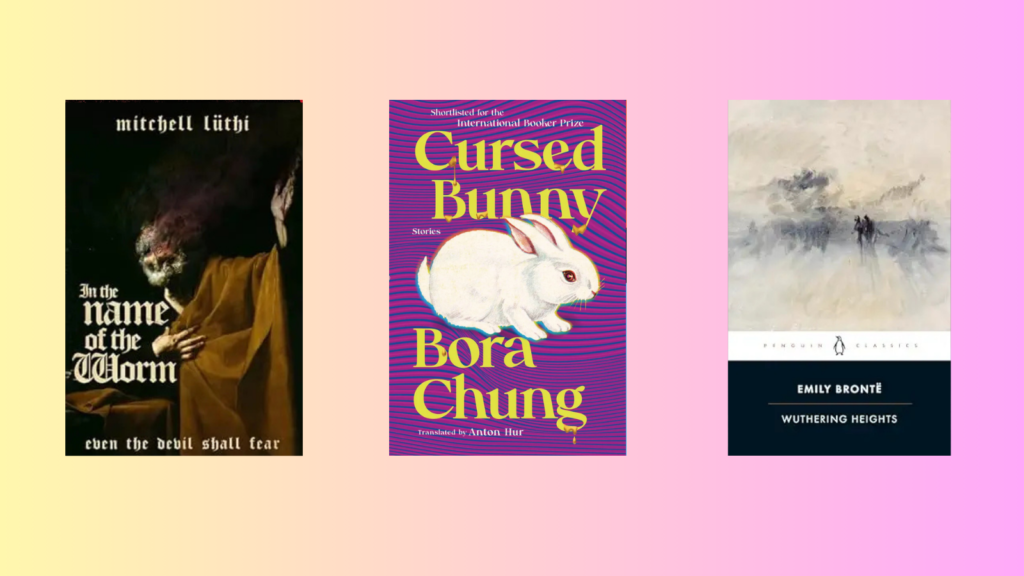
In the Name of the Worm by Mitchell Lüthi
Genre: Historical Fiction | Horror
Rating: 3.75/5 stars
Set in a plague-ridden medieval Europe, In the Name of the Worm is a historical horror novel following Remi and Pierre as they navigate a world of murdered priests, plague prophets, treacherous knights, and stolen relics.
This was such a fun read. The atmosphere was grimy, chaotic, and deeply unsettling in the best way possible. Between the religious paranoia, body horror, and constant sense of decay, the novel fully embraces its bleak medieval setting without losing its sense of adventure. Remi and Pierre also made for compelling protagonists, and their journey through a collapsing world kept the story engaging throughout.
Wuthering Heights by Emily Brontë
Genre: Gothic
Rating: 3/5 stars
I finally got around to reading Wuthering Heights, one of the quintessential Gothic romance novels, and honestly, it was not what I expected at all. Set against the gloomy Yorkshire moors, the novel follows Heathcliff as he seeks revenge against both the Earnshaws and the Lintons.
While Heathcliff endures immense abuse and prejudice throughout his life — especially during childhood — I still found him strangely flat and ultimately unsympathetic as a character. The novel completely lost me once he kidnapped Cathy (the second). Whatever sympathy I had left for him disappeared at that point, and he became entirely unredeemable in my eyes. That said, the atmosphere was incredible. Emily Brontë captures a sense of emotional and physical bleakness so well that the moors almost feel like a character themselves.
Translated by: Anton Hur | Original language: Korean
Genre: Contemporary
Rating: 3.5/5 stars
A short story collection that occasionally veers into magical realism, Cursed Bunny explores the very real horrors and cruelties of patriarchy and capitalism in modern society.
The collection was uneven for me — some stories were incredibly poignant and unsettling, especially “The Head,” while others fell a bit flat. At its best, the book combines absurdity, horror, and dark humor in a way that feels both strange and deeply human.
Non-fiction
Firstborn Girls: A Memoir by Bernice L. McFadden
Bernice McFadden has done it again. I recently finished her memoir Firstborn Girls, which begins with the horrific car accident she survived at just two years old and follows her life through to the publication of her first novel, Sugar (which I reviewed in my April reading wrap-up).
What I loved most about this memoir is that McFadden doesn’t simply recount her own life. Alongside her personal story of growing up in New York during the 1970s and 1980s, she weaves in the broader history of her family and the United States, tracing a path from slavery and the Great Migration to the present day.
McFadden also introduces two concepts that really resonated with me: the literary genealogy tree and angelcestors. A literary genealogy tree is a record of the writers who have inspired your work, while angelcestors are ancestral spirits who guide and protect the living. As a writer, I found the idea of a literary genealogy tree especially compelling.
This was a wonderful memoir, and Bernice McFadden has officially earned a place on my own literary genealogy tree.
The Vampire: A Casebook by Alan Dundes
A collection of scholarly essays which investigate the origin of the word “vampire” as well as the folkloric history of vampires in Eastern Europe: how do vampires come into being, how do you kill them, what are their attributes?