What is it about the undead that keeps refusing to die (forgive the pun)?
I remember when I was first introduced to vampires. I was sitting in my 10th grade chemistry class when a girl beside me who was completely engrossed in a massive book caught my attention.
“What are you reading?” I asked her.
“This is Twilight. Haven’t you heard of it?”
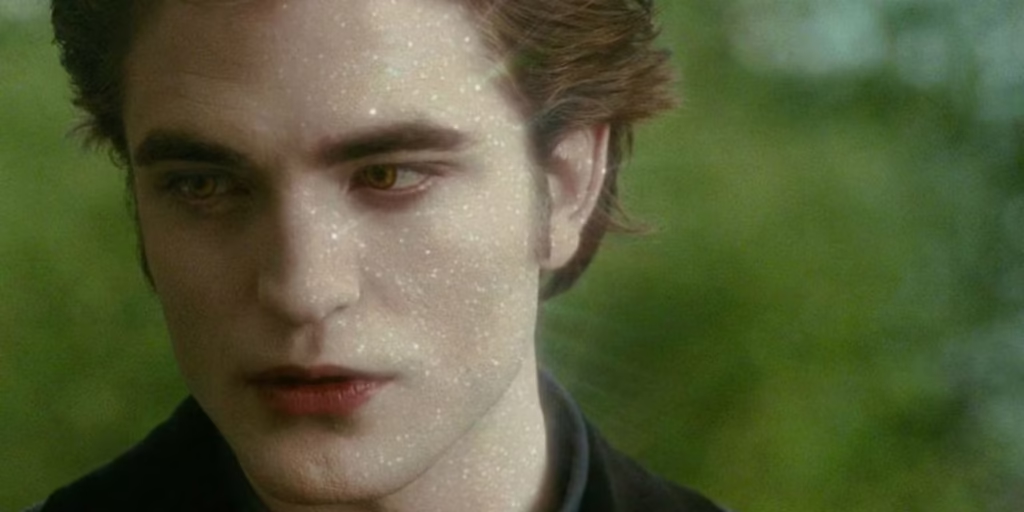
That moment pulled me into the Twilight universe and the world of vampires forever.
Over the years, my taste has shifted from the romantic and sparkly (à la Edward Cullen) to the dark and gothic. But no matter the form, vampires have always held my attention.
Which raises a question: what purpose do vampires actually serve—beyond being seductive and undead? Where do they come from? And why do they keep returning, generation after generation?
These questions led me to start a personal project I’m calling The Vampire Archives. Through this curriculum, I’ll be exploring vampire folklore, the history of vampires in literature, classic Gothic fiction, and modern vampire novels to understand how one of literature’s most enduring monsters has evolved over time.
Vampire Curriculum Overview
This project is structured in three phases, moving from belief → literature → modern media:
🩸 The Vampire Archives: A Roadmap
I. Before Dracula: The Origins of the Vampire
- What Is a Vampire?
- Eastern European Folklore
- Why Vampires Existed
- Did People Believe in Vampires?
II. Before Dracula: The Birth of the Literary Vampire
- Carmilla by Sheridan Le Fanu
- Dracula by Bram Stoker
- Early Gothic Motifs
III. Evolution of the Vampire in Literature – upcoming
- From Monster to Character
- The Vampire’s Voice
- Power, Seduction, and Immortality Reimagined
IV. The Modern Vampire — Sympathy & Seduction upcoming
- Why Are Vampires “Hot”?
- The Sympathetic Vampire
- What Vampires Mean Now
V. Contemporary Vampire Fiction
- Tillinghast by Clare Cavenagh: A Review
- Milkteeth by Caitlin Starling: Book Review
- Filth Eaters by Ito Romo: A Vampire Novel With Little Bite
This will be a four-part series wherein I’ll post reflections, analyses, and key takeaways as I move through each phase. I’m also including a bonus section where I share reviews of contemporary vampire literature. This curriculum is about following one immortal question: what do vampires reveal about the living?