April is derived from the Latin word aperire, meaning “to open.” Spring may technically begin in March, but April is when it finally feels real to me. The flowers are blooming, bees are back in the air, and it’s finally warm enough for morning walks again. I’ve felt so rejuvenated by my friends, my partner, and the sun – yes, the literal sun. All of these things have brought me a certain clarity and joy that I didn’t realize I’d been missing.
Song of the month: Be Your Girl – Kaytranada Remix
Novels
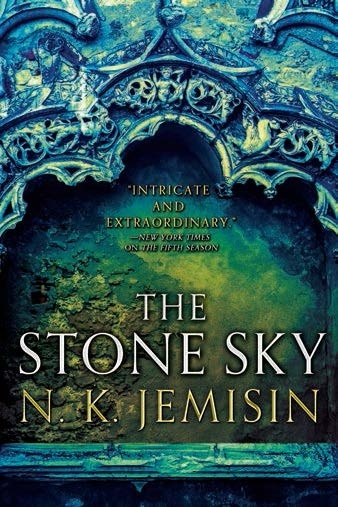
The final book in The Broken Earth series, The Stone Sky follows Essun as she continues her search for her kidnapped daughter, Nassun, during one of the most dangerous periods in the Stillness—a Season: a time of catastrophic, recurring geological and climatic disasters that plague the supercontinent.
The worldbuilding in this series is immense and demands close attention to avoid getting lost (thankfully, there’s a glossary at the back of each book). However, the true focus of N. K. Jemisin’s trilogy is not just its post-apocalyptic setting, science, or magic, but motherhood and love. Jemisin weaves a painful, evocative web of relationships that will make you want to cry, scream, and want to step into the story yourself just to tell the characters what the others are thinking.
The Stone Sky is a stunning conclusion to the trilogy—beautiful, poignant, and, above all, emotionally impactful.
“I think,” Hoa says slowly, “that if you love someone, you don’t get to choose how they love you back.”
Still Born by Guadalupe Nettel
Translated by: Rosalind Harvey | Original language: Spanish
Genre: Literary
Rating: 3.75/5 stars
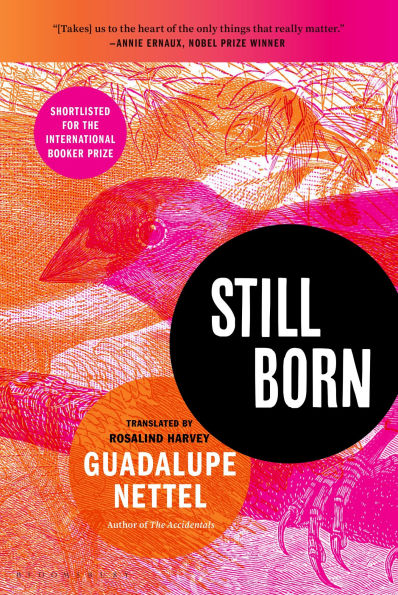
Still Born follows two women navigating motherhood—one who desperately wants a child, and one who doesn’t… until life complicates both of their choices. The voice of Laura, the narrator, is cold yet somehow intimate as she details the complications that arise during her friend Alisa’s pregnancy.
This novel examines motherhood and love, asking: what does it actually mean to care for someone? To love someone unconditionally? Laura’s critique of motherhood is especially poignant and often feels like a conversation with a close friend. Many of her questions and reflections echoed thoughts I’ve had myself, which made the reading experience feel personal and immediate.
At the same time, while I understand the author’s choice to use a detached voice to observe the novel’s central events, this distance occasionally made it difficult to fully connect with Laura. At times, she feels almost too removed from the situation, which flattens her emotional presence. The story might have benefited from giving readers deeper access to her inner life.
“We have the children that we have, not the ones we imagined we’d have, or the ones we’d have liked, and they’re the ones we end up having to contend with.”
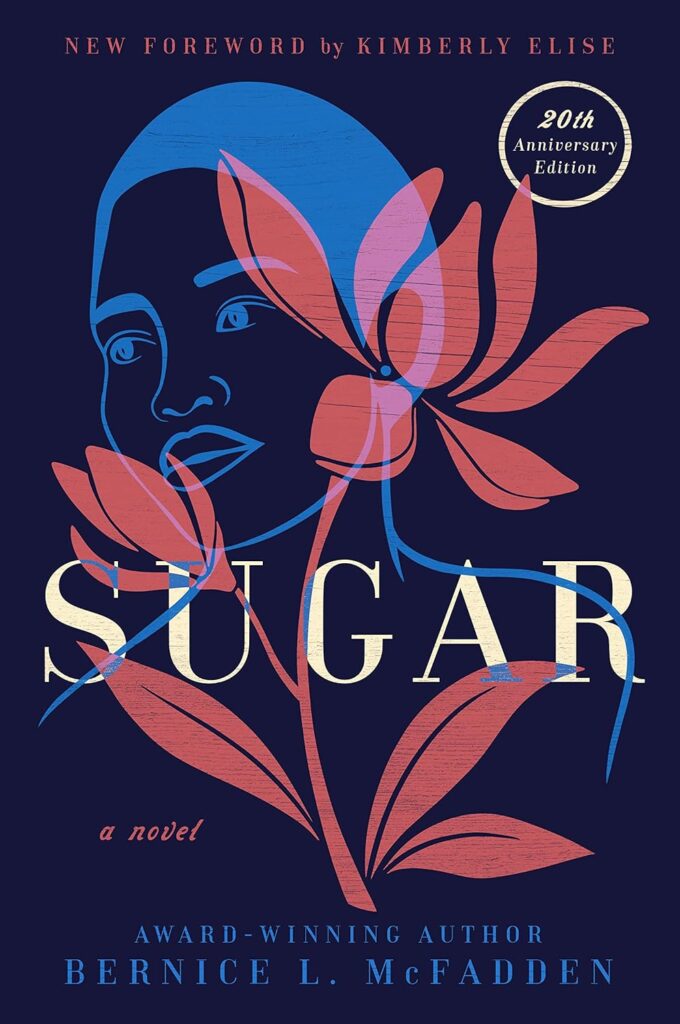
Pearl is still in the throes of grief 15 years after the sadistic murder of her young daughter June when Sugar, a young prostitute, walks into the town of Bigelow, Arkansas, looking to start over and escape her haunting past. Sugar moves in next door and the two form an unlikely friendship that transforms both women’s lives forever.
I was taken on an emotional journey with highs and lows that made me weep not once, but twice. The relationship between Pearl and Sugar is so tender and yet fraught at the same time as they grow to love each other. Both women discover that they share a deep hurt in their souls that’s taken away a part of them, but through their friendship they are able to trust and hope again.
Bernice McFadden has a beautiful grasp of the English language. There were many moments while reading where I highlighted sentences just for their sheer beauty and ability to convey a very specific image. At one point in the novel, Pearl is approaching a group of men. As she walks up to them the narrator says, “Soft chuckles floated up from the group of men like small butterflies” – one of many lines I paused to re-read.
But McFadden does not just use language to evoke beautiful images – she also uses it to evoke painful memories and ancestral trauma. At the start of the book the narrator uses the following phrases to describe blood: “strawberry stain,” “strawberry-colored stain,” and “I-Love-You colors.” Ripe strawberries suggest sweetness warmth, and the heat of summer, while “I love you” evokes tenderness. McFadden subverts these gentle associations, using them to describe blood in a context that strongly implies white supremacist violence.
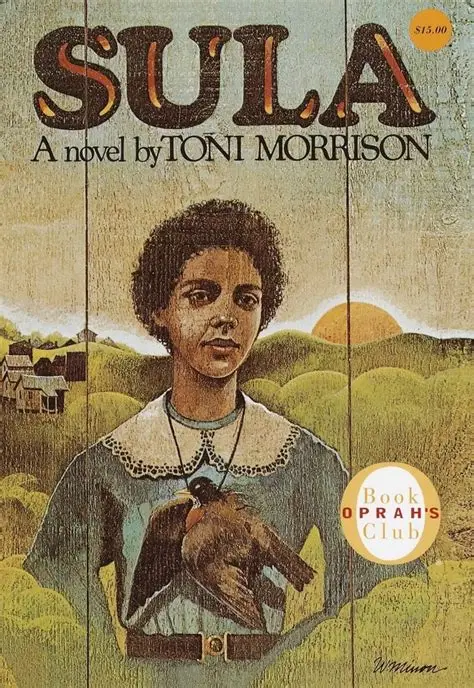
Sula and Nel are born in a small town in Ohio called the Bottom. Complete opposites, Sula is wild and daring while Nel is mild-mannered and conventional. Growing up, the two girls form a bond so strong that they’re almost one. Their friendship seems strong enough to last a lifetime until decades later; Sula’s anarchy leads to a betrayal that may be the end of their friendship.
I almost didn’t finish the book because of how aggravated and upset I was by Sula. Her betrayal is perhaps one of the biggest that a woman can commit towards her friend. But Toni Morrison is always trying to tell us, the readers, something profound. And it takes more than a surface level reaction or reading to get to it. So, I picked the book back up and attempted to be a neutral observer to the lives of Sula and Nel and all the people of the Bottom.
That’s when I realized how revolutionary Sula was. She was not evil or a witch. She did not purposefully do things to cause harm. She had no desire or ability to mold herself to social conventions, and that’s what caused the pain and tension between her and the other residents of the Bottom. But what really stood out to me and will stay with me forever is when Nel confronted Sula about her betrayal and being a social pariah. Sula responds by saying,
“But my lonely is mine. Now your lonely is somebody else’s. Made by somebody else and handed to you. Ain’t that something? A secondhand lonely.”
This short quip from a pain-ridden Sula (does she have cancer?) shocked me. Suddenly, I have to evaluate my own life and decisions as a woman. Was there anything that I was compromising on? That I had given up in the pursuit of conformity? Did I control the narrative of my own life or was I letting society and social convention take the reins?
The relationship between Sula and Nel is complex and intriguing. Despite the betrayal and the pain caused by Sula, it is her that Nel cries for years later as she confronts her grief.
“We was girls together,” she said as though explaining something. “O Lord, Sula,” she cried, “girl, girl, girl, girl, girl.”
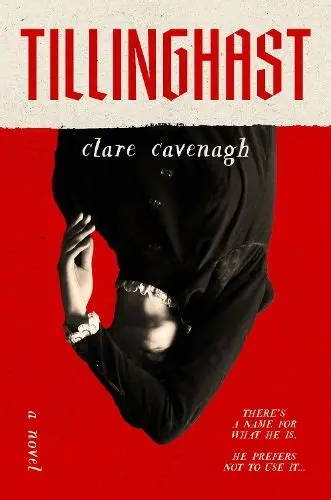
When did vampires become so boring? Inspired by the real events of the New England vampire panic of the nineteenth century, Tillinghast by Clare Cavenagh follows a vampire (this is never mentioned directly) priest whose life is upended upon the arrival of a mysterious stranger. As a lover of all things gothic and vampire – I was immediately intrigued. The beautiful cover also did a good job of pulling me in.
Unfortunately, this book did not meet my expectations. For a vampire, and a relatively young one at that, Stutley Tillinghast seems to not know much of anything – about humans or vampires. The words “he had no idea” and “he couldn’t tell” seemed to pop up every time Tilinghast ran into an obstacle. I started to wonder as I was reading, what does he know?
He’s also the blandest character in the novel, which is quite unfortunate since he is the main character. His internal monologue started to feel repetitive as I sloughed through the ploddingly slow plot.
Vampires are supposed to make me feel something (I’m thinking of Louis and Lestat in Anne Rice’s Vampire Chronicles). Yet, the only thing I felt while reading this novel was boredom. Unfortunately, this is not the first contemporary vampire novel to bore me to tears. Perhaps I’ll re-read the Vampire Chronicles, just to feel something again.
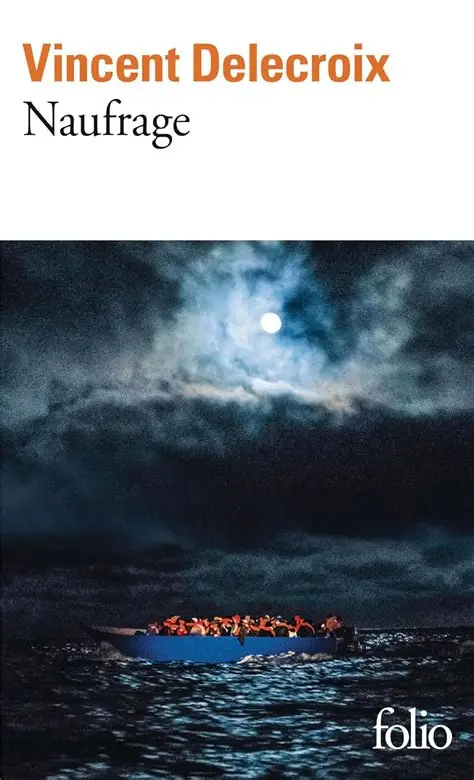
When I saw that a French book had recently been shortlisted for the 2025 International Booker Prize, I decided that Small Boat by Vincent Delecroix would be my French-language read for the month. Based on real-life events, Small Boat is told from the perspective of a French navy office who ignored the pleas of drowning migrants hovering between French and British waters. When the novel starts, the migrants have already died, and the navy officer is being interrogated as part of an investigation by the French government to figure out what went wrong.
“I didn’t ask you to leave, I said. It was your idea, and if you didn’t want to get your feet wet, love, you shouldn’t have embarked. I didn’t push you into the water, I didn’t fetch you from your village or field or ruin of a suburb and put you in your wretched leaky boat, and now the water’s up to your ankles, I get it that you’re frightened, and you want me to save you and you’re impatient. You’re counting on me. But I didn’t ask you for any of that. So you’ll just have to grin and bear it and let me get on with my job.”
Written in stream-of-consciousness, the navy officer is unemotional and cynical as she refuses culpability in the deaths of the migrants. It’s hard to not immediately dismiss the arguments of the narrator as heartless and even monstrous. But Vincent Delecroix wants us, the reader, to take a step back and really grapple with the questions being posed. Can one person really be blamed for the deaths of 27 people? What is our collective responsibility?
Small Boat is a powerful and timely novel that forces readers to confront uncomfortable truths about responsibility, morality, and banality of evil.
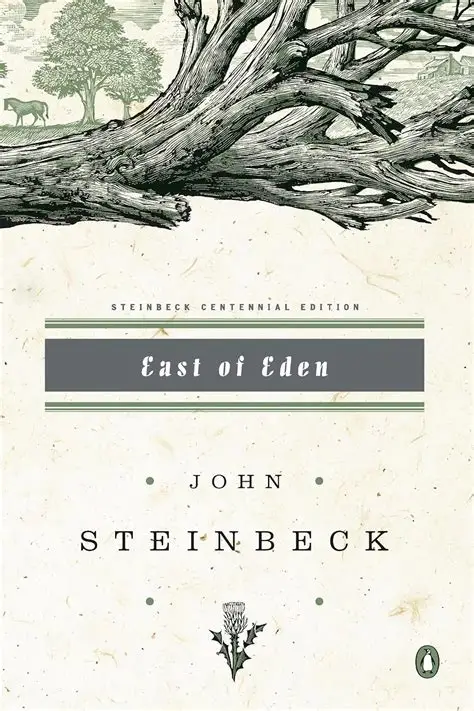
John Steinbeck’s East of Eden is a behemoth of a novel that follows the intertwined destinies of two families – the Trasks and the Hamiltons – whose generations reenact the deadly rivalry of Cain and Abel. Set in the rich farmland of California’s Salinas Valley, the novel becomes a meditation on family, love, and moral inheritance.
Somehow, this was my first time reading Steinbeck. I finally picked it up because of TikTok, and after waiting ages for a library copy (I was #257 on the hold list), I gave in and bought it—something I try not to do, or I’d go broke.
I was immediately enthralled by Steinbeck’s prose—it made the Salinas Valley feel vivid and alive. Just as compelling was the story itself: a family trapped in cycles of harm, repeating the same mistakes across generations.
I couldn’t put this book down. It was philosophical, insightful – a true masterpiece of American literature. East of Eden should be required reading. It shows how easy it is to slip into old patterns which amplify the sins of our fathers and what a lack of love can do to somebody.
Non-Fiction
Killing the Dead: Vampire Epidemics from Mesopotamia to the New World by John Blair and The Vampire: A Casebook by Alan Dundes
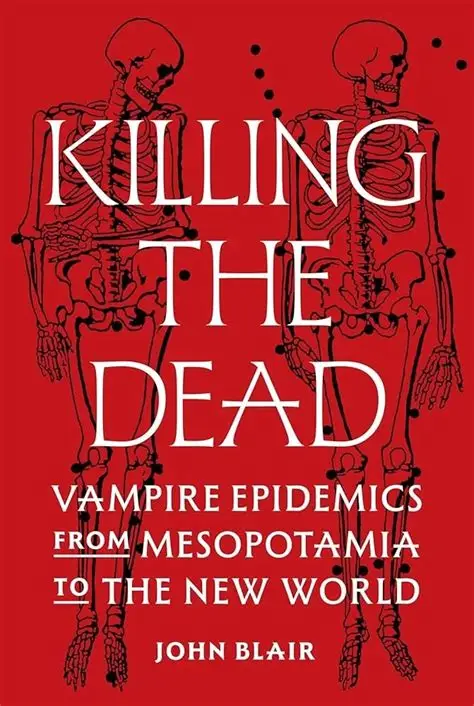
This month I started my personal curriculum on vampires. I’ve always had an affinity for vampires and what they represent, and I’ve decided that I want to get to the bottom of these gothic (and sexy) creatures. Killing the Dead is a global historical study of vampire epidemics and corpse-killing rituals, tracing beliefs about the “dangerous dead” from ancient Mesopotamia to the modern Americas.
The Vampire: A Casebook is a collection of scholarly essays which investigate the origin of the word “vampire” as well as the folkloric history of vampires in Eastern Europe: how do vampires come into being, how do you kill them, what are their attributes?
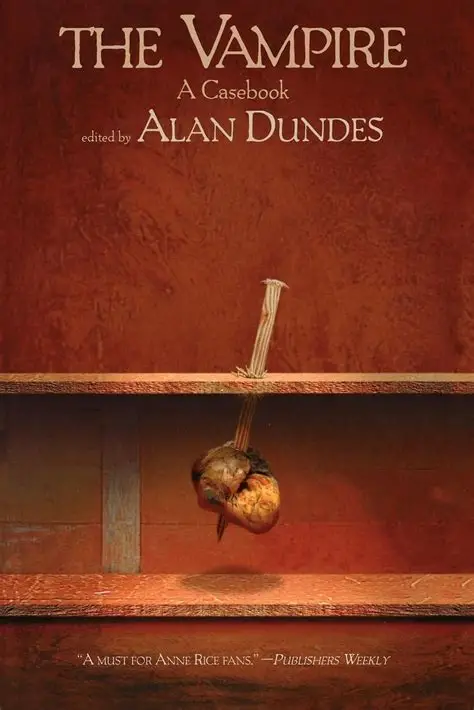
I will continue reading both books as we enter May and then move on to the next part of my curriculum which will focus on vampires in the media. I will write blog posts on what I’ve learned as part of a series called The Vampire Archives.
Why I Write by Joan Didion and On Keeping a Notebook by Joan Didion
I’ve always had a journal growing up. Hidden in the back of my closet is a box with every journal that I’ve ever written my thoughts into from adolescence until now. But recently, I picked up my journal and saw that a whole year has gone by and I haven’t written anything. Many things have gotten in the way, but I’m trying to take control of my life and do the things that bring me joy. I read both Why I Write and On Keeping a Notebook by Joan Didion to give me some much-needed inspiration to pick up my pen and..write.