Introduction
Trauma runs deep in the waters of the Paraguaçu river and the Silva family.
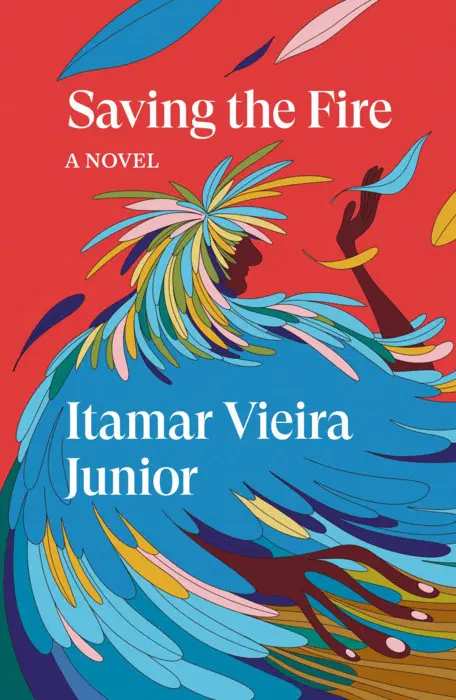
Saving the Fire by Itamar Vieira Junior gives us an intimate portrayal of marginalized communities on the outskirts of society through the Silva family–their hopes, their fears, their pain–showing how the legacy of slavery and colonialism impact the present. Originally published in 2023, but not translated until 2026, Saving the Fire is the follow up to Junior’s international bestseller, Crooked Plow.
What Saving the Fire Is About
The small rural Afro-Indigenous village of Tapera do Paraguaçu, mired in poverty and overlooked from above by a forbidding seventeenth century monastery, is the backdrop of an emotional family saga grappling with the colonial legacy of Brazil. With their mother long gone, Luzia takes care of her baby brother Moisés the best that she can, but rumors of her incendiary powers have made her an outcast in her community, leading to her suffering years of abuse and isolation. The story is told from the point of view of multiple members of the Silva family and time blurs as they reflect on the past and the present.
A Lyrical Portrait of Rural Brazil
In Saving the Fire, the bleakness of rural life is palpable. Each of the Silva children leave their village as soon as they are old enough to work or get married, seeking escape from a landscape marked by poverty, silence, and generational trauma. This exodus leaves Luzia and Moisés behind to take care of one another and their father, even as they carry the deepest psychological wounds. Yet, despite their physical proximity, an imposed culture of silence—reinforced by the authority of the church—prevents them from seeking solace in one another. Instead, they internalize their pain and repress their memories and so Moisés, like the rest of his siblings, decides to flee his village so that he can try to make a name for himself away from the locus of his family’s trauma and misfortune.
Near the end of the novel, the siblings are brought together by tragedy, which forces them all to confront the past they have long suppressed. The narrative’s nonlinear structure mirrors this process, as the buried memories resurface and startling revelations are made.
Itamar Vieira Junior skillfully employs remembering as an act of resistance and memory as a weapon against the oppressive entity of the church through the character Moisés. By refusing to remain silent about his experiences, he challenges the authority of the church, which has functioned as an oppressive force by enforcing repression and moral control. This process of remembrance allows Moisés to confront him to not only confront his trauma but also to reestablish a meaningful connection with Luzia.
Conclusion
Itamar Vieira Junior deftly weaves together a story of inter-generational trauma but also of resilience as we see the world through the eyes of the Silva family. Saving the Fire is both poetic and powerful, showing us how the struggles of one family can painfully reflect the wounds of a nation.
Publish date: September 1, 2026
Saving the Fire will be published by Verso Books; my thanks to the publishers for kindly sharing an advanced reader copy with me.
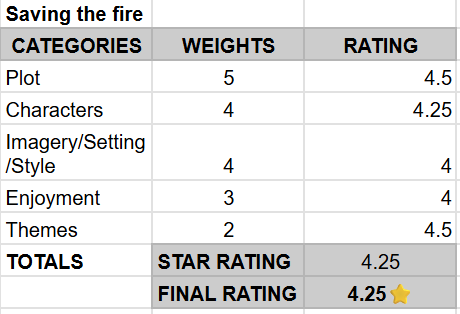
Rating: 4.25/5 stars